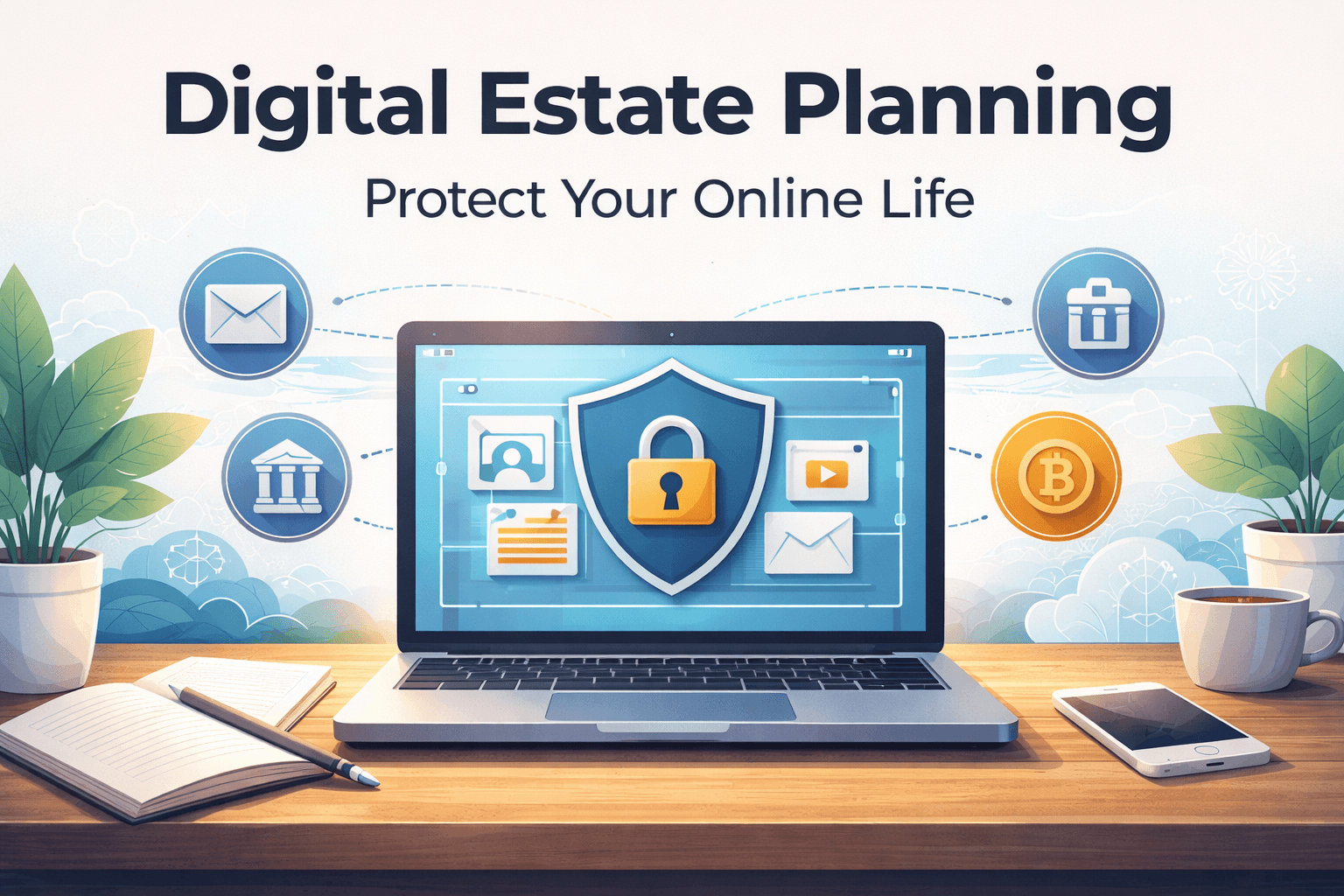
Digital Estate Planning for Millennials
Millennials are old enough to have real responsibilities and young enough to underestimate how much of life depends on digital access.
Many people in this generation pay bills from a phone, receive tax documents by email, store family photos in the cloud, manage savings through apps, work freelance through online platforms, and secure everything with one password manager. If that system suddenly becomes inaccessible, the disruption can hit a partner, parent, sibling, or executor almost immediately.
That is why digital estate planning for millennials is not only about death. It is also about continuity during incapacity, travel emergencies, device loss, or any moment when the person who usually runs the digital side of life cannot respond.
Why millennials have a special digital planning problem
Earlier generations may have kept more paperwork in filing cabinets. Millennials often keep the operational details of life in scattered digital systems.
That can include:
- Email accounts that receive bills, security alerts, and legal notices
- Phones that hold authenticator apps and password managers
- Banking, payment, and budgeting apps
- Subscription dashboards for utilities, software, streaming, and storage
- Cloud drives containing contracts, IDs, tax records, and family documents
- Social media, creator, gaming, or marketplace accounts
- Side-hustle systems such as domain registrars, payment processors, and client platforms
Each piece may seem manageable on its own. Together they form an access map that nobody else fully understands.
Start with the accounts that create immediate disruption
The best first step is not to document everything at once. Start with the accounts that would cause chaos within a week if you vanished.
For most millennials, that means:
- The main email account tied to password resets
- The primary phone number and any two-factor authentication apps
- Rent, mortgage, utilities, and autopay accounts
- Banking and payment platforms
- Cloud storage with legal or financial records
- Shared subscriptions or family plans
- Work systems or online income accounts that another person may need to preserve
This list matters because a digital estate plan is not just a record of what you own. It is a guide to what someone else needs to stabilize first.
Name the person who should act first
Every digital estate plan needs a human being at the center of it.
That person may be a spouse, partner, sibling, parent, close friend, or future executor. What matters is that you trust them, they are capable of handling sensitive information, and the role fits your broader estate and incapacity planning.
The CFPB notes that a power of attorney can allow someone to act on your behalf during incapacity. That does not solve every digital access problem, but it does show why the digital plan should connect to real legal authority instead of relying only on informal favors.
If you have nobody identified, that is the first gap to fix. An account inventory without a trusted decision-maker is only half a plan.
Do not confuse instructions with password dumping
A lot of millennials hear "digital estate planning" and think it means handing someone a spreadsheet full of passwords.
That is usually too risky and too incomplete.
A better plan tells the trusted person:
- What the account is
- Why it matters
- What should happen to it
- Where secure credentials or recovery steps are stored
- Which provider tools are already configured
For example, your notes might say that a cloud drive should be preserved, a freelance marketplace account should be reviewed for unpaid invoices, a photo library should be archived, and a streaming bundle can be canceled later. Those instructions are more useful than raw credentials with no context.
Account planning matters even if you do not think of yourself as wealthy
Millennials sometimes delay estate planning because they do not own a house, do not have children, or assume they do not have enough assets yet.
Digital estate planning works differently. The issue is often coordination, not wealth.
A person with one laptop, one phone, one main email account, several subscription services, a few financial apps, and a side business can still leave behind a major mess. Family members may not know which accounts matter, which bills are recurring, where important documents live, or whether there is income still arriving through online tools.
That is why this kind of planning makes sense long before traditional estate milestones.
Use provider tools where they fit
Official platform tools can reduce friction if you set them up in advance.
Google Inactive Account Manager can notify trusted contacts and share selected data after a period of inactivity. Apple Legacy Contact can help a chosen person request access to certain Apple account data after death. These tools are not a full digital estate plan, but they are useful parts of one.
Your written plan should note:
- Which providers have official planning features
- Whether you have already enabled them
- Where related records, access keys, or setup notes are stored
- What gaps still remain outside those ecosystems
This matters because no single provider tool will cover everything from banking apps to domain renewals to subscription billing.
Include side hustles and online income
One millennial-specific risk is hidden online business complexity.
Many people in this age group sell products online, freelance after work, run small creator channels, manage affiliate accounts, or maintain a monetized website on the side. Those projects may have real financial value even if they started as hobbies.
A useful plan should identify:
- Where income is received
- Which accounts control payouts
- What services keep the business alive
- Which deadlines or renewals matter
- Whether the trusted person should preserve, pause, transfer, or close the project
This can protect both revenue and reputation. Without instructions, a family member may not even know a domain needs renewal or a client inbox needs monitoring.
Build a first-week checklist
Millennials often live at the center of tightly linked devices and accounts, so the first week after a crisis matters a lot.
A short checklist can help the trusted person focus:
- Secure the primary phone, laptop, and email account
- Preserve access to password recovery tools and authenticator apps
- Review legal authority and written instructions
- Check banking, bills, subscriptions, and unusual account activity
- Preserve cloud files, photos, and any active income systems before closing anything
This is also where identity theft prevention matters. The FTC emphasizes monitoring and responding when suspicious activity appears. In practice, that means the trusted person should watch for billing changes, unfamiliar logins, or strange messages while everything is unsettled.
Review it whenever adult life changes
Millennial life can change quickly. A move, marriage, breakup, new child, career shift, layoff, new side hustle, or switch from Android to iPhone can all make an old plan inaccurate.
Keep the plan simple enough that you will update it. If it is too detailed to maintain, it will fail when someone actually needs it.
Conclusion
Digital estate planning for millennials is really about reducing chaos for the people who would have to untangle your digital life under stress.
List the accounts that matter most, identify the trusted person who should act, connect the plan to legal authority, use official provider tools where they help, and write clear instructions for what should be preserved, reviewed, or closed. You do not need a giant estate to need a digital estate plan. You only need a modern life.