The Complete Guide to Digital Legacy Planning
Most people carefully plan what happens to their physical possessions. Homes, bank accounts, and family heirlooms are often documented in wills or estate plans.
But there is another part of modern life that often goes unplanned: our digital lives.
Email accounts, cloud storage, cryptocurrency wallets, social media profiles, and online businesses all contain valuable information. Without digital legacy planning, these assets can become inaccessible, lost, or locked behind privacy policies after death.
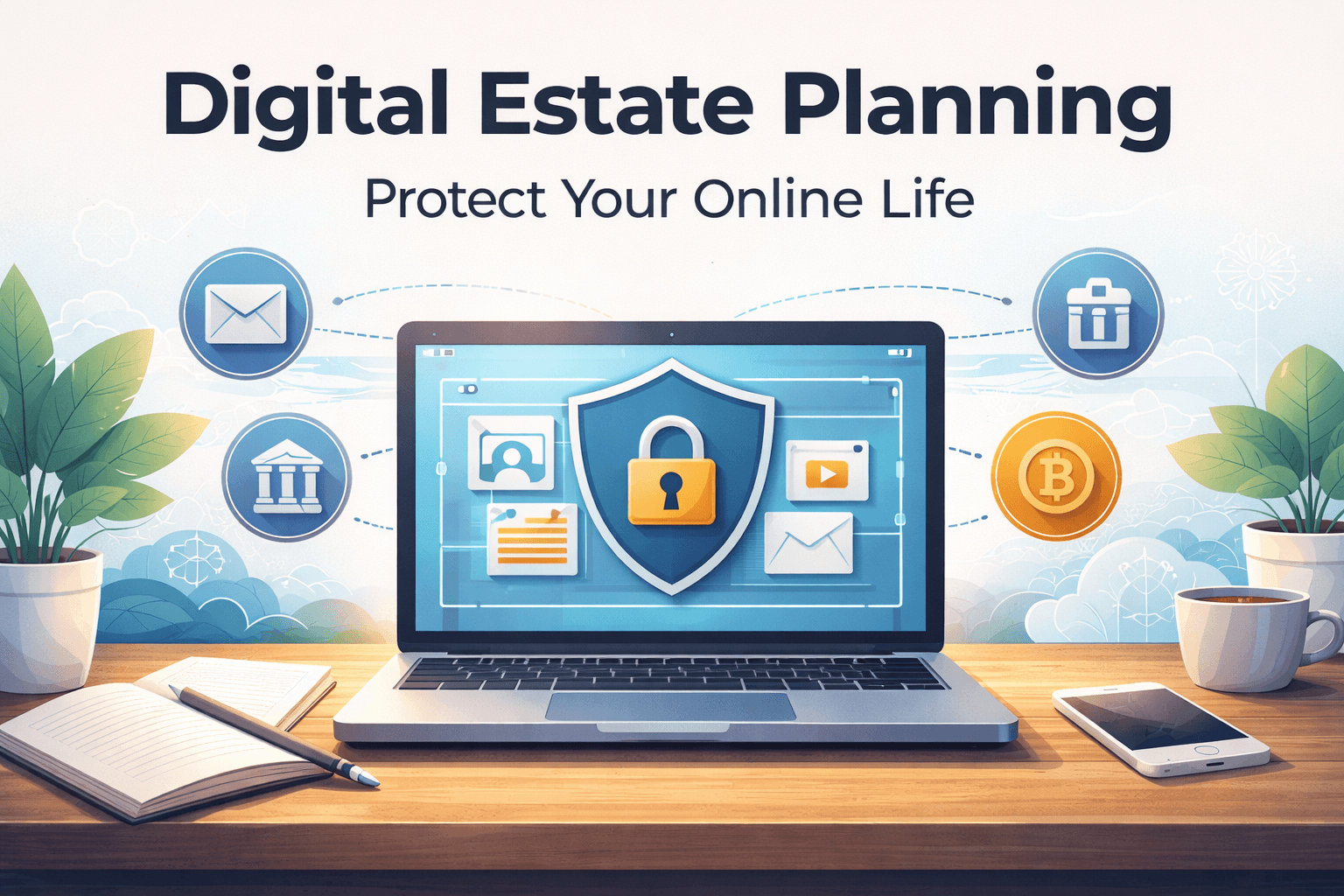
Digital legacy planning helps ensure that your online life is organized, protected, and accessible to the people you trust when the time comes.
If you want to ensure your digital assets are not lost or forgotten, tools like Memento Mori Email make it possible to organize information securely and deliver it to trusted recipients when needed.
Why Digital Legacy Planning Matters Today
The average person now manages dozens, sometimes hundreds, of online accounts. Each one holds pieces of their identity, finances, or memories.
Yet most traditional estate planning documents rarely address them.
The Hidden Value of Digital Assets
Your digital life likely includes:
- Personal photos stored in cloud services
- Email archives containing important documents
- Cryptocurrency wallets
- Domain names and websites
- Online businesses or revenue streams
- Social media accounts
- Subscription services
- Digital intellectual property
Some assets have financial value, while others hold sentimental value for family members.
Without proper planning, both can disappear.
Why Traditional Estate Planning Is No Longer Enough
Traditional estate planning focuses on physical and financial property.
Digital assets create new challenges:
- Password protection
- Platform privacy rules
- Two-factor authentication
- Encryption
- Platform account policies
Family members often cannot legally access accounts without prior authorization.
That is why digital estate planning has become an essential extension of modern estate planning.
What Happens to Online Accounts After Death?
Different platforms have different rules.
Some allow memorialization. Others delete inactive accounts. Some require complex legal documentation.
Email Accounts
Email accounts often contain:
- Financial records
- Personal correspondence
- Access to password resets
However, most email providers will not automatically grant access to relatives.
Without clear instructions, families may never retrieve critical information.
Social Media Platforms
Social media platforms handle deceased users differently:
Common outcomes include:
- Memorialized accounts
- Permanent deletion
- Restricted family access
Without prior configuration, loved ones may be unable to control what happens to these accounts.
Financial and Subscription Accounts
Online services connected to finances can include:
- Investment platforms
- Crypto exchanges
- Payment platforms
- Subscription services
Without account documentation, these assets can be difficult to recover.
What Counts as a Digital Asset?
Many people underestimate the scope of their digital assets.
Financial Digital Assets
Examples include:
- Cryptocurrency wallets
- PayPal or payment accounts
- Investment accounts
- Online businesses
- Monetized content channels
- Domain names
These assets may have significant financial value.
Personal Digital Assets
Some assets may not be financial but still matter deeply:
- Family photos
- Videos
- Personal writings
- Private email archives
- Cloud storage documents
These often become treasured family memories.
Intellectual Property
Digital creators may own:
- Online courses
- Blogs
- Podcasts
- Photography libraries
- Design files
- Software projects
Proper planning ensures these assets remain accessible.
A Practical Digital Estate Planning Checklist
Digital legacy planning does not need to be complicated.
The key is organization.
Step 1: Create a Digital Asset Inventory
Start by listing your online accounts.
Include:
- Account name
- Platform
- Type of asset
- Access method
- Importance level
This inventory becomes the foundation of your digital estate.
Step 2: Decide What Should Happen to Each Account
Different accounts may require different outcomes:
Examples:
- Delete personal accounts
- Transfer financial assets
- Archive family photos
- Send final messages
Clear instructions remove confusion later.
Step 3: Choose Trusted Recipients
Select individuals who will receive access or instructions.
These might include:
- Family members
- Close friends
- Business partners
- Legal representatives
Trust and clarity are essential.
Step 4: Store Instructions Securely
Avoid storing sensitive credentials in insecure places like:
- Plain text documents
- Email drafts
- Notes apps
Instead, use secure encrypted systems that protect sensitive information.
Platforms such as Memento Mori Email help organize this information and schedule delivery to trusted contacts when appropriate.
How to Pass Down Digital Assets Securely
Security is the biggest challenge in digital inheritance.
Sharing passwords directly can create serious risks.
Risks of Sharing Passwords
Many people write passwords in notebooks or store them in spreadsheets.
Problems include:
- Unauthorized access
- Data leaks
- Lost records
- Security breaches
Sensitive data should always be protected with strong encryption.
Secure Vaults and Encrypted Storage
Modern digital legacy tools rely on:
- Encryption
- Access control
- secure storage
- identity verification
This ensures only the intended recipients receive information.
Automated Delivery After Death
Some platforms provide posthumous message services, allowing users to schedule the delivery of:
- instructions
- messages
- account information
Memento Mori Email is designed specifically for this purpose, helping users securely organize digital legacy information and deliver it to trusted recipients when the time is right.
Security and privacy protections are central to this process.
Common Mistakes in Digital Legacy Planning
Even people who attempt digital estate planning often make mistakes.
Common ones include:
Ignoring digital assets entirely
Many people never document them.
Leaving passwords in unsecured files
This creates serious security risks.
Failing to update records
Online accounts change frequently.
Choosing unclear instructions
Ambiguity can create confusion for family members.
Avoiding these mistakes dramatically improves the effectiveness of a digital legacy plan.
Tools That Help Manage Your Digital Legacy
Several approaches exist for organizing digital inheritance.
These include:
- Password managers
- Digital estate planning documents
- Encrypted vault systems
- posthumous message services
Each solution addresses part of the problem.
Dedicated tools like Memento Mori Email combine several of these functions by allowing users to securely organize digital legacy information and schedule its delivery to trusted individuals.
For more resources on digital legacy planning strategies, explore additional guides on the blog.
The Future of Digital Inheritance
As more of life moves online, digital inheritance will become increasingly important.
Future developments may include:
- legal frameworks for digital assets
- platform standardized inheritance tools
- AI-assisted digital legacy management
- stronger privacy protections
The concept of a digital estate will likely become as common as a traditional will.
Planning early ensures your digital life remains organized and protected.
People Also Ask
Do digital assets need to be included in a will?
Sometimes, but not always. Many experts recommend keeping sensitive credentials outside of public legal documents while referencing them securely.
Can family members access my online accounts after death?
Usually only with prior authorization or platform-specific procedures.
Is digital legacy planning expensive?
Not necessarily. Many tools make it simple and affordable.
Should I update my digital estate regularly?
Yes. Accounts change over time, so periodic updates are important.
Final Thoughts
Your digital life contains valuable information, financial assets, and personal memories.
Without digital legacy planning, these assets can become inaccessible or lost.
By creating an inventory, documenting instructions, and storing information securely, you can ensure your digital estate is protected and accessible to the people you trust.
Tools like Memento Mori Email make this process easier by helping you organize digital legacy information and securely schedule its delivery to trusted recipients.
If you want to take the first step toward protecting your online life, creating a simple digital legacy plan today can make a meaningful difference for the people you care about.